About Course
Life Skills · Health & Wellbeing
Allergy Awareness and Anaphylaxis Response for School Staff
Annual training for every member of school staff, mapped to the DfE statutory guidance Allergy Safety in Schools
Sharing food is one of the friendliest things human beings do. We do it in every culture, in every country, every single day. For most of us it is completely safe. For some people, one bite of the wrong food can start a reaction that becomes a medical emergency within minutes.
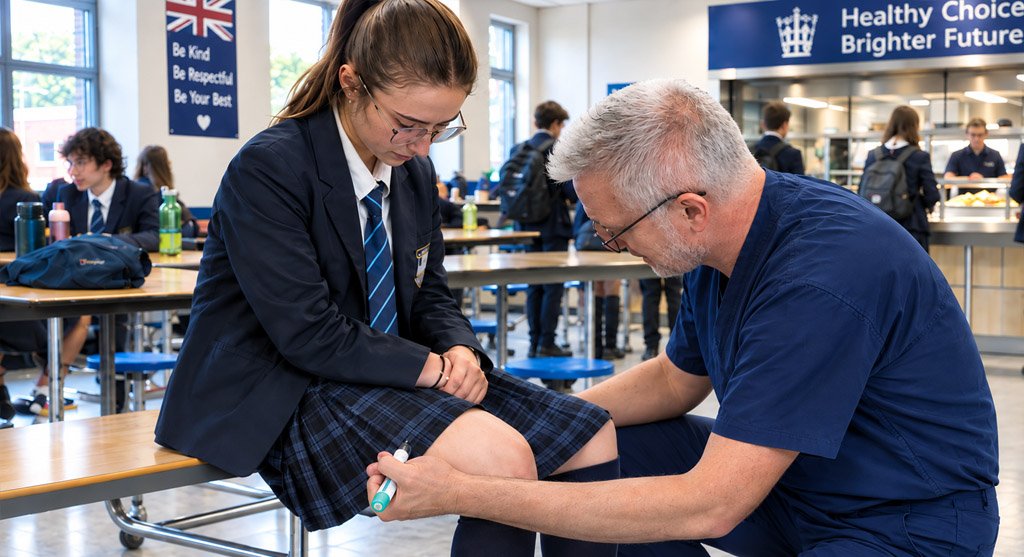
Around one in five children with an allergy has their first reaction at school, and almost every classroom contains someone with an allergic condition. This course teaches you what allergies are, how to recognise a serious reaction and exactly what to do about it. It also tells the story of a five year old boy whose death changed the law in England, and what that law now requires of every school.
This course has a companion podcast episode, Allergies and Anaphylaxis, which you can listen to at nlsa.uk. Listen first and read along, or work through the course and use the podcast to bring it all together.
By the end of this course you will be able to
- Tell the difference between food allergy, coeliac disease and food intolerance.
- Explain what your school must do under the allergy safety duty, and where to find your school’s own allergy safety policy.
- Find and use a pupil’s Individual Healthcare Plan, and know what it means for the pupil in front of you.
- Recognise the signs of anaphylaxis.
- Give the six-step emergency response in the correct order, including using an adrenaline device.
- Give the emergency response for an asthma attack, including the reliever inhaler and spacer.
- Know what your school may hold as spare adrenaline, and where it is kept.
- Take the everyday precautions that apply to your own role, whether you are a teacher, a lunchtime supervisor, a caterer, an administrator or a senior leader.
- Report allergy bullying as a safeguarding concern.
- Report a reaction or a near miss.
The content is mapped against the Department for Education statutory guidance Allergy Safety in Schools (June 2026), which applies to maintained schools, academies and pupil referral units in England from 1 September 2026. The guidance is clear that a first aid certificate is not sufficient for this purpose. A mapping document is available to purchasing schools on request.
This allergy course builds awareness. It is not a clinical qualification, and it does not replace professional first aid training, medical advice, your school’s own allergy safety policy or any Individual Healthcare Plan (IHP).
Course Content
Allergies and Anaphylaxis
-
Listen to this pre-course podcast 10 minutes.
-
Narrated Course Presentation (45 minutes)
-
Summative Assessment: Allergy Awareness and Anaphylaxis Response for School Staff
-
Course Terms and Scope
-
END OF COURSE
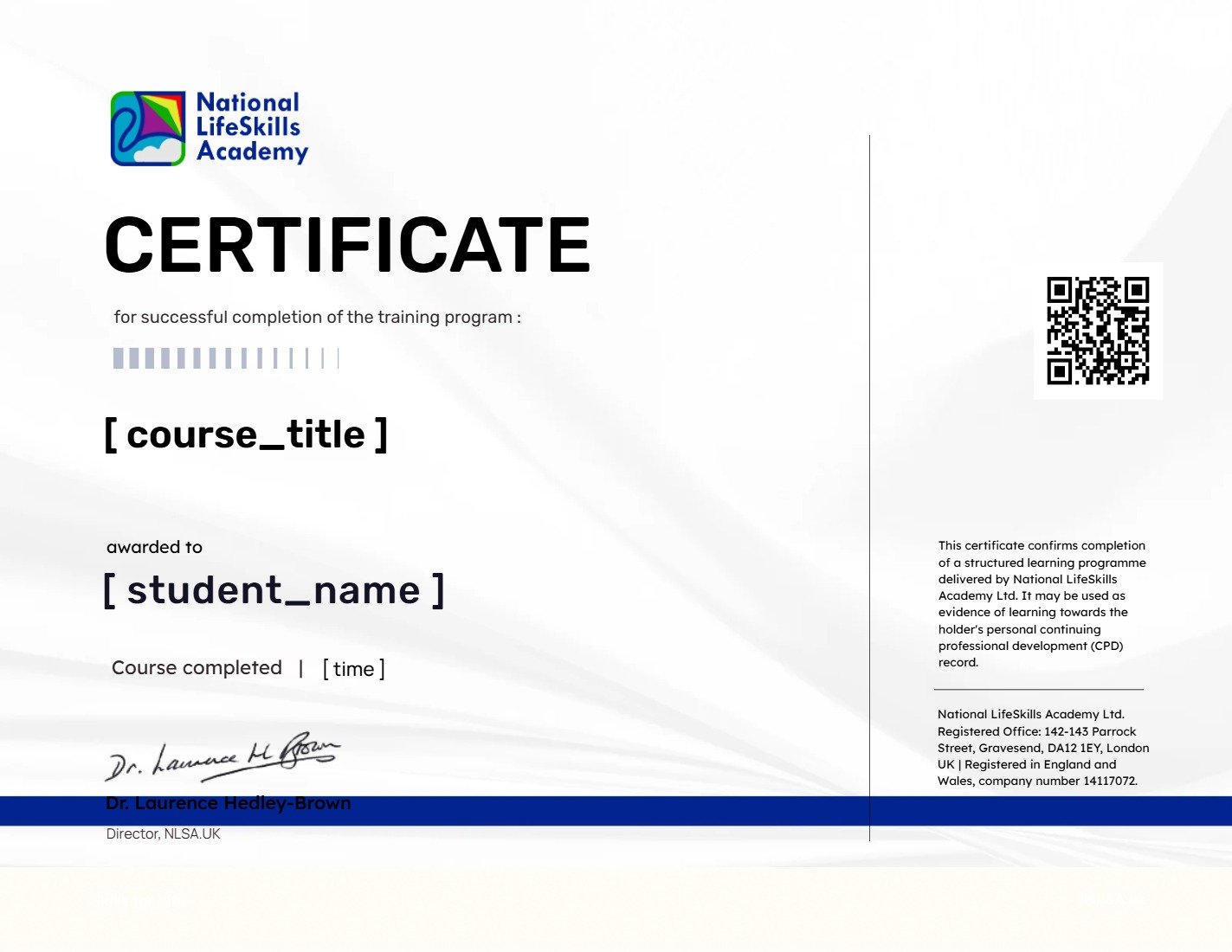
Earn a certificate
Add this certificate to your resume to demonstrate your skills & increase your chances of getting noticed.